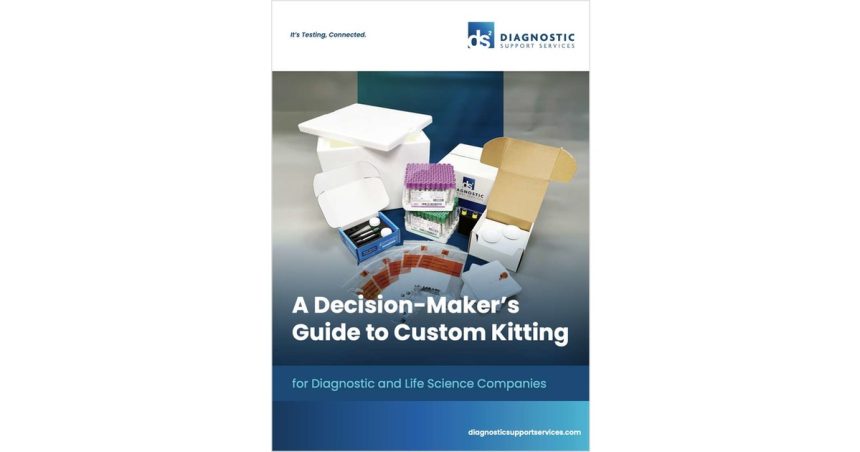
When your clinical trial, commercial test, or at-home testing product depends on specimens arriving intact from distributed collection sites, kitting stops being a procurement task and starts being a strategic decision.
Fragmented vendors, manual ordering processes, and inconsistent kit quality create downstream problems that cost time, money, and credibility. A rejected specimen is a delayed result, a repeated collection visit, and, at scale, a real threat to study timelines and commercial outcomes.
This guide is designed for operations, quality, and commercial leaders at healthcare organizations, medical diagnostic companies, and direct-to-consumer testing solutions who are evaluating custom kitting partners or looking to improve their current setup.
In this guide you will learn:
- The seven design variables that define a truly custom kit, from architecture and temperature control to labeling, barcoding, and regulatory compliance
- Five questions to ask any kitting partner, and the answers that separate regulated-grade providers from general fulfillment operations
- How to evaluate whether a partner can scale with you, from a 50-kit pilot to millions of kits annually
- What to look for in quality metrics, project management models, and LIS/EMR integration
- What to look for in quality metrics, project management models, and technology integrations including LIS/EMR/API integrations and custom portal design.
- How PathGroup consolidated oncology kits, requisitions, and return shipping under a single standardized platform with DS2
Download the guide to evaluate your kitting setup against the framework used by companies like PathGroup, C2N Diagnostics, Cordant, Circulogene, and Mirvie.
Offered Free by: DS2
See All Resources from: DS2