
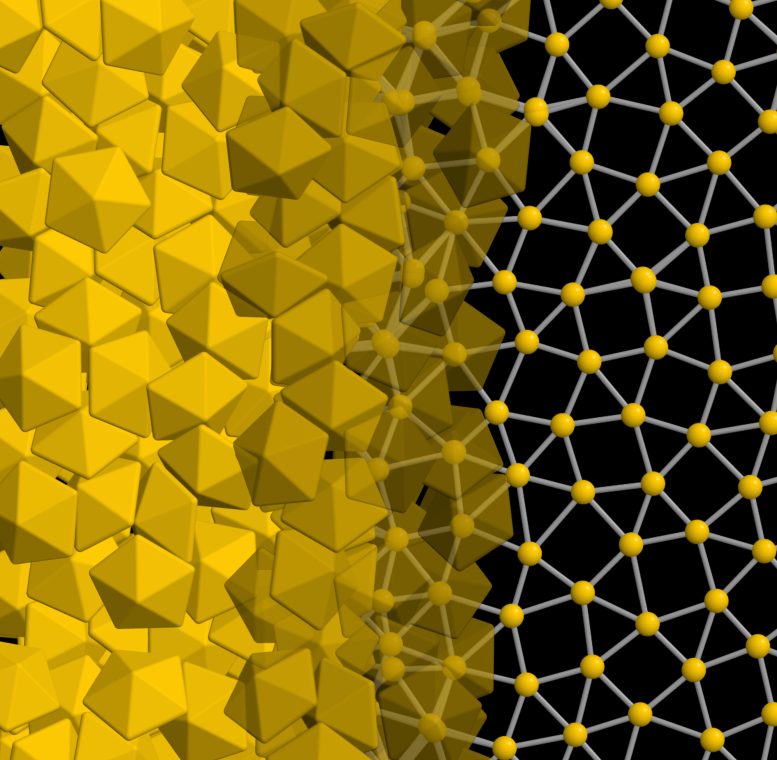
 The breakthrough paves the way for the design and construction of more complex structures. Nanoengineers have created a quasicrystal—a scientifically intriguing and technologically promising material structure—from nanoparticles using DNA, the molecule that encodes life. The team, led by researchers at Northwestern University, the University of Michigan and the Center for Cooperative Research in Biomaterials in […]
Source link
Revolution in Material Science: Scientists Construct Nanoparticle Quasicrystal With DNA

Smart Electrogastrogram Recorder Market Investment Opportunities Outlook
InsightAce Analytic Pvt. Ltd. announces the release of a market assessment report on the “Global…

تُظهر الدراسة أن وجبة الإفطار الغنية بالجوز من الممكن أن تساعد في تعزيز قوة دماغك
California Walnut كما أظهر بحثٌ جديد أن تناول الجوز في وجبة الإفطار يمكن أن يحسّن…

Arab Newswire Provides Press Release Distribution in Arabic
Arab Newswire - Press release distribution to media in MENA/GCC Regions Newswire expands reach with…